The fireplace is one of the oldest features in residential architecture. For thousands of years, humans have gathered around controlled fire for warmth, cooking, and community. The technology has changed dramatically over the centuries, but the role the fireplace plays in a home has remained remarkably consistent.
Ancient Hearths
The earliest known hearths date back over 400,000 years, found in archaeological sites across Europe and the Middle East. These were simple fire pits, often located in the center of a dwelling with no chimney or flue. Smoke escaped through holes in the roof or simply filled the living space. Despite the discomfort, the central hearth was essential for survival, providing heat, light, and a place to prepare food.
Medieval Chimneys
The chimney as we know it began to appear in Europe around the 12th century. Early chimneys were made of stone or clay and were built into the walls of castles and large homes. This innovation moved the fire from the center of the room to the wall, dramatically improving air quality indoors. By the 14th and 15th centuries, chimneys had become standard in upper-class homes. Fireplaces grew larger, more ornate, and became symbols of wealth and status.
The Franklin Stove
In 1742, Benjamin Franklin invented a metal-lined fireplace insert that stood in the center of a room and radiated heat more efficiently than a traditional open fireplace. Known as the Franklin stove, this design reduced the amount of firewood needed and sent less heat up the chimney. While Franklin never patented his invention, the design was widely copied and improved upon, establishing the principle that enclosed combustion is far more efficient than open burning.
The Cast Iron Era
The 19th century brought mass production of cast iron stoves and fireplace inserts. Companies like the Albany Stove Works and Pratt and Wentworth produced thousands of decorative cast iron units that heated homes across America. Coal replaced wood as the primary fuel in many urban areas. Fireplace design during this period became highly ornamental, with elaborate mantels, tilework, and iron grates that reflected Victorian tastes.
Gas Fireplaces in the 20th Century
Gas fireplaces first appeared in the early 1900s but did not gain widespread popularity until the latter half of the century. The development of direct vent technology in the 1980s was a turning point. For the first time, homeowners could install a gas fireplace in any room without needing a traditional masonry chimney. This opened up the market and made fireplaces accessible in apartments, condos, and homes built without existing flues. By the 1990s, gas fireplaces had overtaken wood-burning models in new construction across North America.
Modern Electric and Gas Units
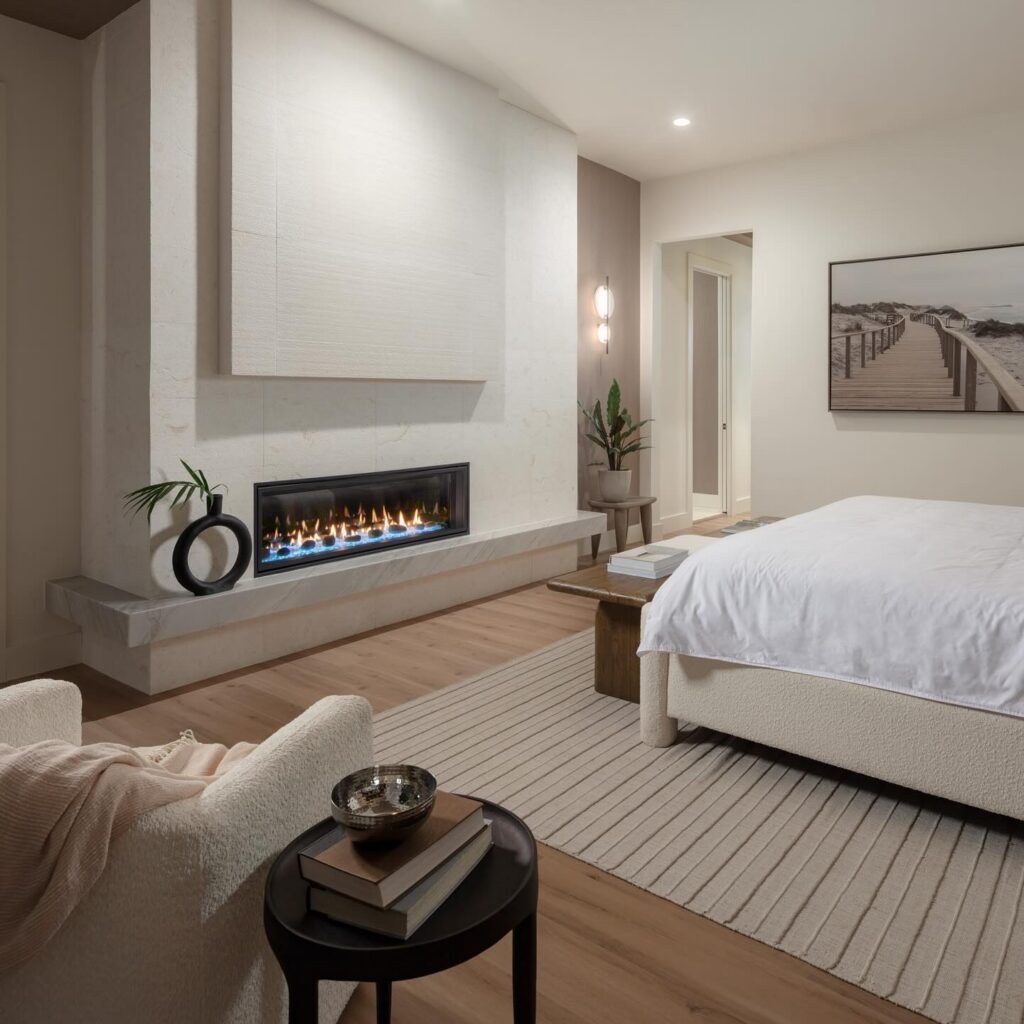
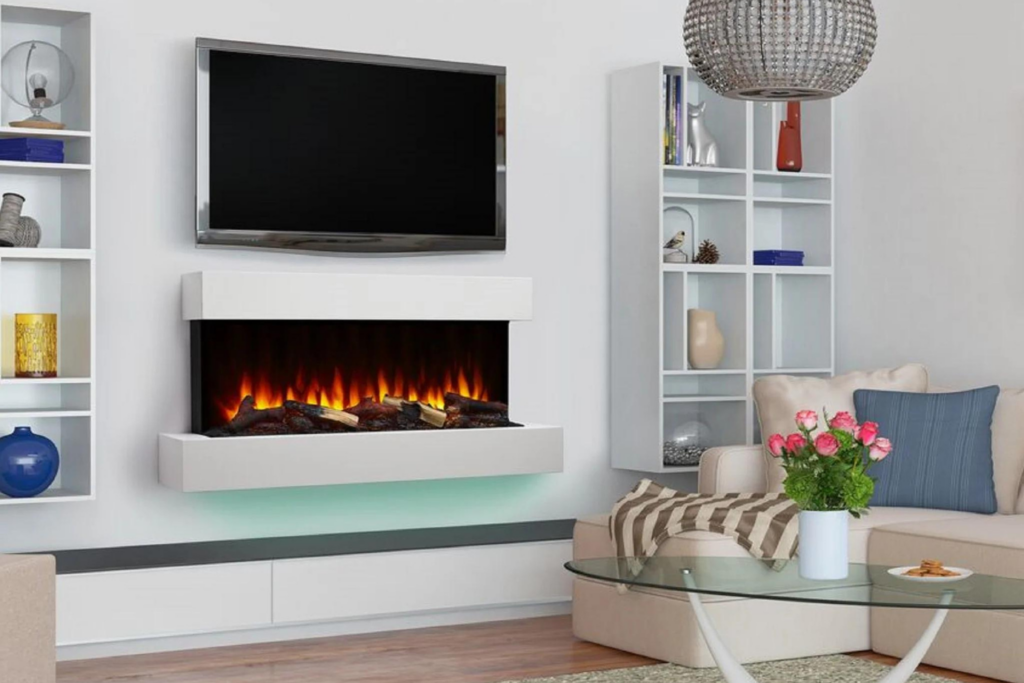
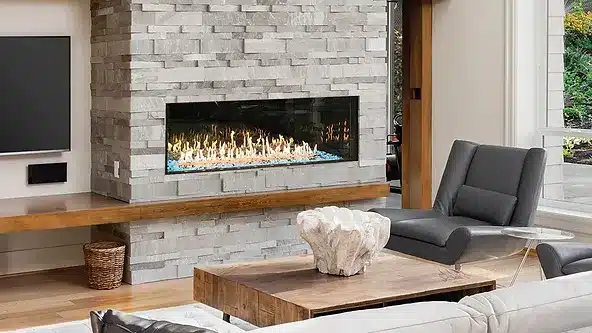
Today, fireplaces are available in more configurations than ever. Modern gas fireplaces feature electronic ignition, Wi-Fi controls, and efficiency ratings above 80 percent. Electric fireplaces use LED technology to produce realistic flame effects with no combustion at all, making them suitable for any room with a standard electrical outlet. Linear, see-through, and outdoor models have expanded the possibilities for how and where a fireplace can be installed.
In Las Vegas, both gas and electric fireplaces are popular choices for new homes and remodels. The mild winters and modern architectural styles of Southern Nevada pair well with the clean lines and low-maintenance operation of contemporary fireplace technology.
At Hearth and Home Specialties, we have been part of this story for over 25 years. Visit our showroom to see how far the fireplace has come, from ancient hearths to the modern gas and electric units we install today. Call (702) 474-4099.