Building a commercial restroom involves more than plumbing and tile. From ADA compliance to partition selection and accessory placement, every detail is governed by building codes and practical considerations. Whether you are building out a new restaurant, office, or retail space in Las Vegas, understanding these requirements up front saves time and avoids costly rework during inspections.
ADA Compliance
The Americans with Disabilities Act sets specific requirements for commercial restrooms. At least one stall must be wheelchair-accessible, with a minimum clear floor space of 60 inches by 60 inches. Grab bars are required on the side wall and rear wall of accessible stalls. Door hardware must be operable with one hand and without tight grasping or twisting.
Sinks in accessible restrooms must have a maximum rim height of 34 inches, with knee clearance underneath. Mirrors must be mounted with the bottom edge of the reflecting surface no higher than 40 inches above the floor. Soap dispensers, paper towel holders, and hand dryers must be reachable from a seated position.
Choosing Partition Materials
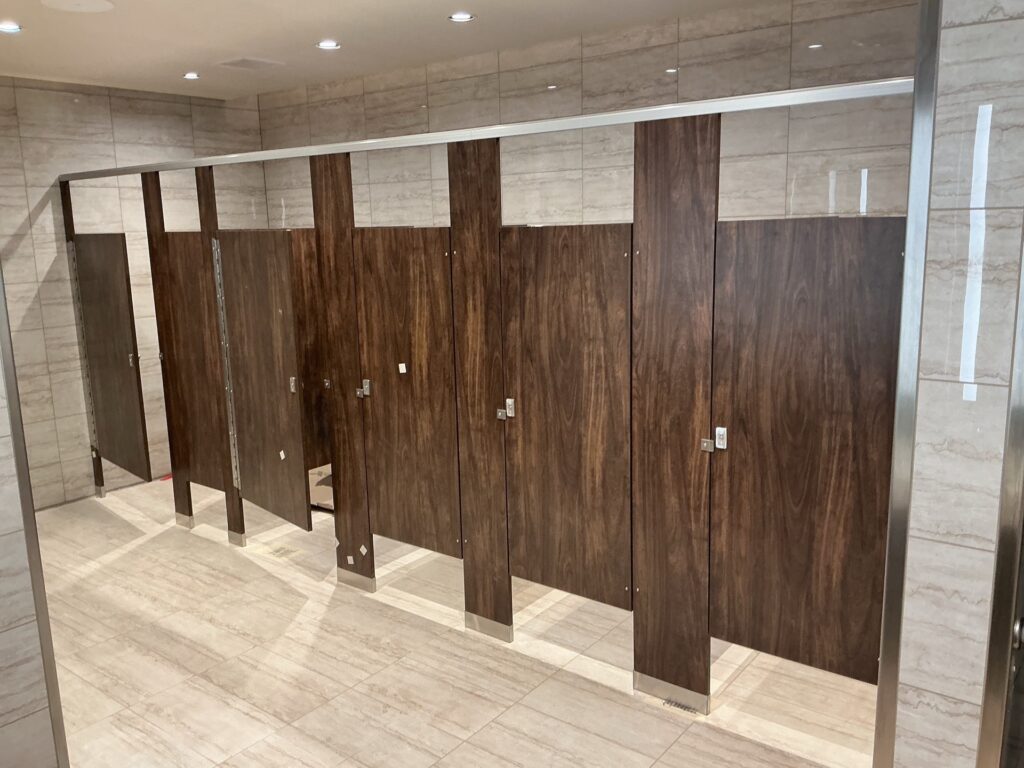
Restroom partitions take a beating in commercial settings. The material you choose affects durability, appearance, and long-term maintenance costs. Here are the most common options:
- Powder-Coated Steel: The most budget-friendly option. Steel partitions are strong and available in a wide range of colors. They work well in office buildings and light-traffic restrooms. The downside is that they can rust if the coating is chipped, which makes them a poor choice for high-moisture environments.
- Plastic Laminate: These partitions have a particleboard core with a plastic laminate surface. They offer a clean, finished appearance and resist minor impacts. Like steel, they are vulnerable to moisture damage over time, so they are best suited for dry, indoor applications.
- Solid Plastic (HDPE): High-density polyethylene partitions are waterproof, graffiti-resistant, and extremely durable. They are ideal for schools, parks, gyms, and any high-traffic restroom. They cost more than steel or laminate but last significantly longer.
- Stainless Steel: The premium option for commercial restrooms. Stainless steel resists corrosion, vandalism, and heavy use. You will find these in casinos, high-end restaurants, and corporate offices in Las Vegas where appearance and durability both matter.
- Phenolic: Phenolic partitions use a resin-impregnated material that is nearly indestructible. They resist water, impact, and scratching. They are a top choice for high-traffic commercial facilities and are available in modern finishes that look as good as they perform.
Accessories and Fixtures
Beyond partitions, a well-planned commercial restroom includes the right accessories. Soap dispensers, paper towel dispensers or hand dryers, waste receptacles, seat cover dispensers, and sanitary napkin disposal units all need to be specified and placed according to ADA reach ranges. Baby changing stations are required in many occupancy types under recent code updates.
Code Requirements in Clark County
Clark County follows the International Plumbing Code (IPC) for fixture counts, which determines how many toilets, urinals, and sinks your restroom needs based on occupancy type and building capacity. Getting the fixture count wrong means failing your plan review before construction even starts.
Hearth and Home Specialties supplies and installs commercial restroom partitions, accessories, and related products for businesses across the Las Vegas valley. We work with contractors, architects, and building owners to make sure every restroom meets code and serves its users well. Reach out for a free consultation.