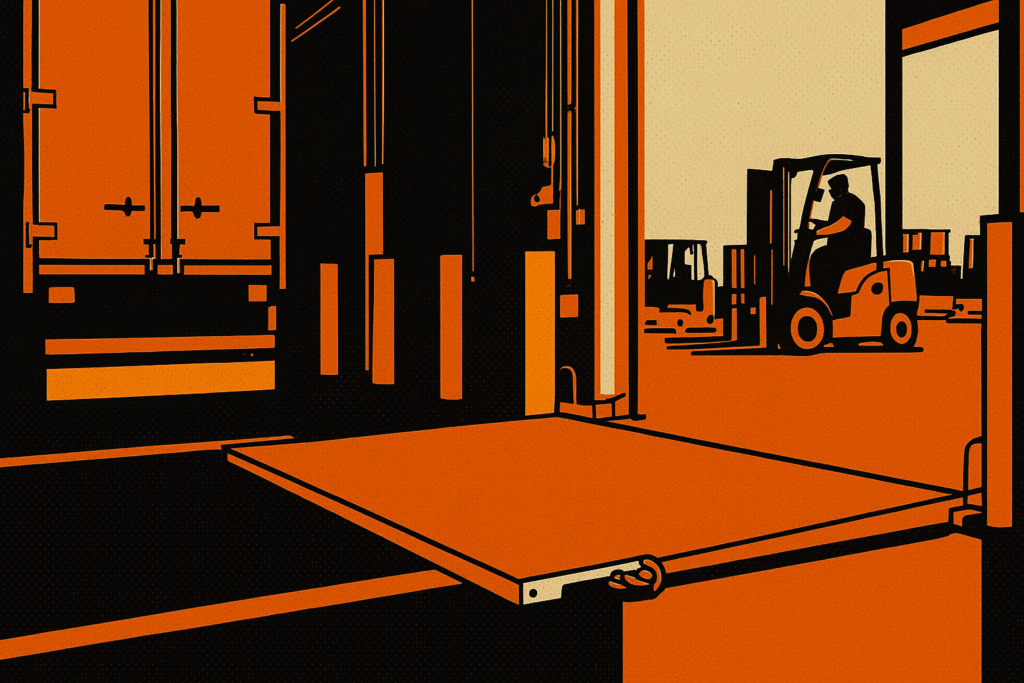
If you operate a warehouse, distribution center, or any commercial facility that receives truck deliveries, you have probably seen a dock leveler in action. A dock leveler is the bridge between your loading dock and the bed of a delivery truck. It compensates for differences in height and distance, allowing forklifts and pallet jacks to move freely between the building and the trailer.
Without a dock leveler, loading and unloading becomes slow, dangerous, and physically demanding. The gap between a dock and a truck bed can shift as cargo is moved and the trailer’s suspension adjusts, which creates tripping hazards and equipment damage. A properly installed dock leveler eliminates these problems.
Types of Dock Levelers
There are three main types of dock levelers, each suited to different workloads and budgets.
- Hydraulic Dock Levelers: These are the most common in high-volume facilities. A hydraulic pump raises the platform to the correct height, and the lip extends automatically to rest on the truck bed. They are durable, easy to operate with push-button controls, and built for heavy daily use. Most Las Vegas warehouses and distribution centers rely on hydraulic units.
- Mechanical Dock Levelers: Mechanical levelers use a spring-loaded mechanism. The operator walks onto the platform, activates a pull-chain or release handle, and the leveler rises. These cost less upfront than hydraulic models and work well in facilities with moderate traffic. The trade-off is more physical effort for the operator and more wear on the springs over time.
- Air-Powered Dock Levelers: Air-powered units use an airbag system beneath the deck to raise and lower the platform. They offer a smooth operation similar to hydraulic levelers but with fewer moving parts and lower maintenance requirements. They sit in a good middle ground between mechanical and hydraulic options.
How a Dock Leveler Works
When a truck backs into the dock, the operator activates the leveler. The deck rises above the dock floor, the lip plate extends outward, and the entire platform lowers onto the truck bed. This creates a smooth ramp between the dock and the trailer. As the truck’s suspension shifts during loading, the leveler floats with the movement, maintaining a safe, stable surface.
Safety Features to Look For
Modern dock levelers include several safety features that protect workers and equipment. Look for these when specifying a unit for your facility:
- Full-range toe guards that prevent feet and hands from getting caught beneath the platform.
- Velocity fuses that stop the deck from free-falling if a hydraulic line fails.
- End-of-dock bumpers that absorb trailer impact and protect the leveler from damage.
- Lip keepers that hold the lip in the stored position until the leveler is activated, preventing accidental deployment.
Choosing the Right Dock Leveler in Las Vegas
The best dock leveler for your facility depends on traffic volume, load weights, and budget. Facilities handling 25 or more loads per day typically benefit from hydraulic units. Lighter-traffic docks with a few deliveries per week may do fine with a mechanical leveler.
Hearth and Home Specialties installs and services dock levelers across the Las Vegas valley. Whether you need a new installation, a replacement, or ongoing maintenance, our commercial team can help you find the right fit. Contact us for a free estimate.