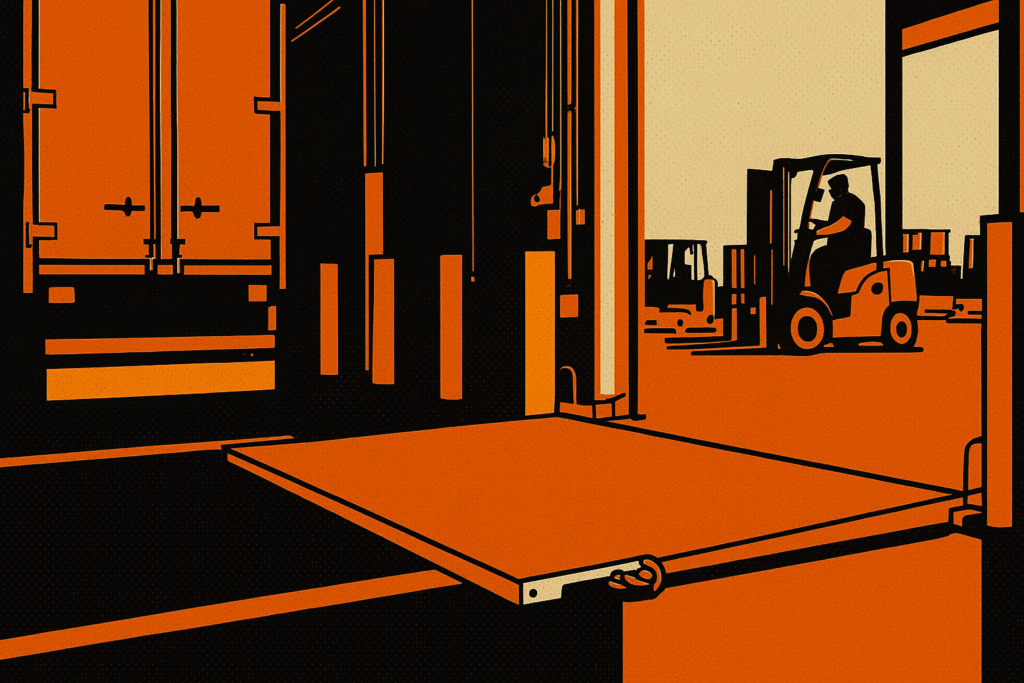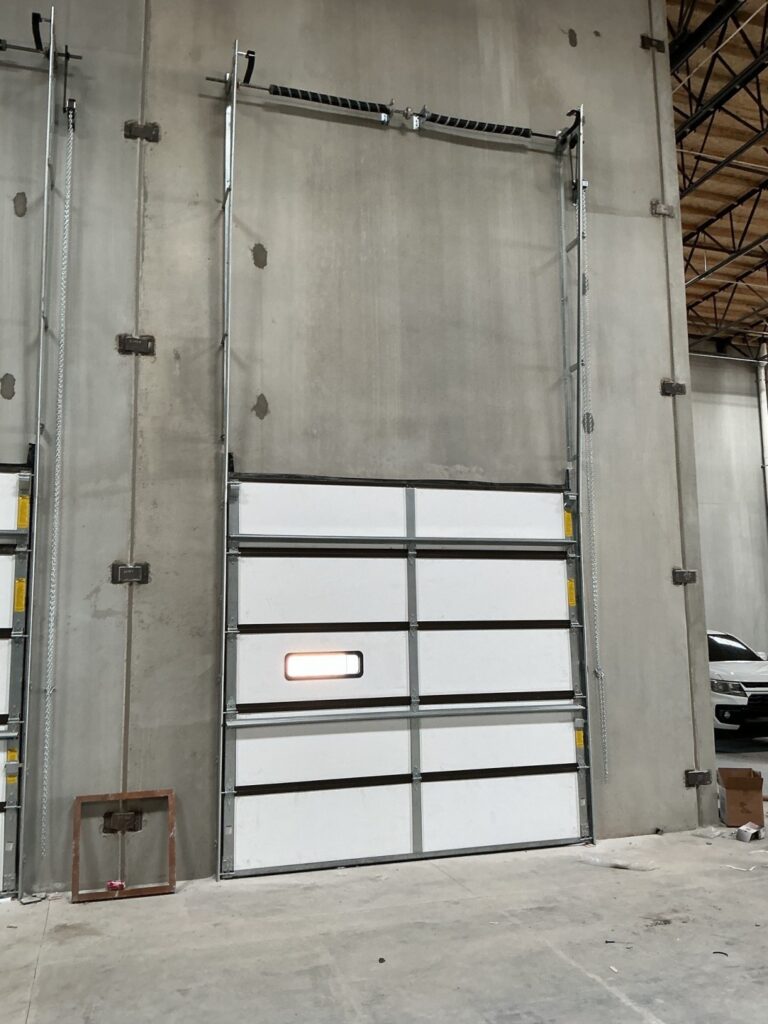
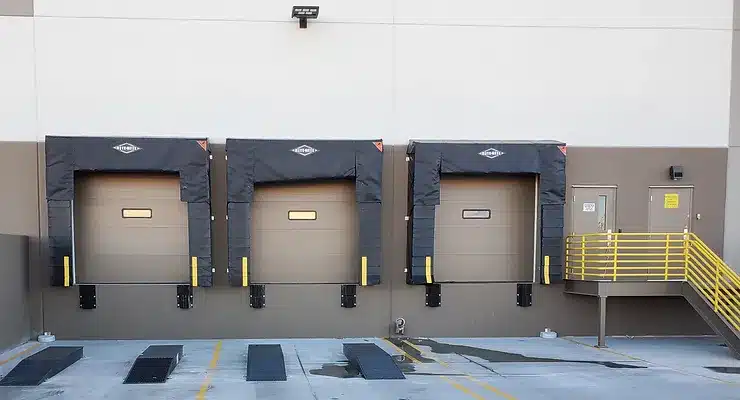
Every year, loading dock accidents cause serious injuries and fatalities across the United States. One of the most common and most preventable causes is trailer creep, where a truck gradually moves away from the dock during loading or unloading. When the gap between the dock and the trailer widens, forklifts can fall through, workers can be caught between surfaces, and cargo can be destroyed.
Vehicle restraints are designed to prevent exactly this. They physically lock a truck or trailer to the dock, keeping it in place until loading is complete and the restraint is released.
Why Vehicle Restraints Matter
The weight of a loaded forklift moving in and out of a trailer pushes the truck forward with every trip. Over the course of a full unload, a truck without restraints can drift several feet from the dock. Wheel chocks alone are not always enough to prevent this movement, especially on sloped lots or in wet conditions.
According to OSHA, employers are responsible for ensuring that trucks are properly secured at the dock. Failing to restrain vehicles during loading and unloading is a citable violation, and the fines can be significant. More importantly, proper restraints protect the people working on your dock every day.
Types of Vehicle Restraints
- Wheel Chocks:The simplest form of restraint. Rubber or steel blocks are placed in front of and behind the truck’s rear wheels to prevent rolling. Wheel chocks are inexpensive and portable, but they depend on the driver or dock worker to place them correctly. They also offer no protection against a driver pulling away before loading is finished.
- Hook-Based Restraints:These are mounted to the dock face and use a rotating hook that engages the truck’s rear impact guard (RIG bar). Once engaged, the hook holds the trailer firmly against the dock. These are the most common powered restraint in commercial facilities and are available in manual and automatic versions.
- Wheel-Based Restraints:Instead of engaging the RIG bar, these restraints grip the truck’s rear tires using a carriage that moves along a track in the drive approach. Wheel-based restraints are useful for trucks that have non-standard or damaged RIG bars. They are also effective for trailers without RIG bars, such as certain flatbeds and specialized vehicles.
OSHA Requirements and Best Practices
OSHA standard 1910.178 addresses powered industrial truck safety, including dock operations. While OSHA does not mandate a specific type of restraint, it does require that trailers be secured against movement during loading. Facilities are expected to evaluate their dock operations and implement appropriate controls.
Best practices include installing powered restraints at every active dock position, using interior and exterior communication lights to signal when it is safe to load or depart, and training all dock workers on proper restraint procedures.
Preventing Accidents at Your Facility
The cost of a vehicle restraint system is small compared to the cost of a dock accident. Workers’ compensation claims, equipment damage, lost product, and OSHA penalties add up quickly. Investing in proper restraints is one of the most effective safety decisions a facility manager can make.
Hearth and Home Specialties installs and services vehicle restraint systems for commercial facilities throughout Las Vegas. Whether you need new restraints, a retrofit to your existing dock, or ongoing maintenance, our team is ready to help. Contact us for a free assessment of your loading dock.